Home

A Python package for multidisciplinary studies
-
What is it for?
Automatically explore design spaces.
Find optimal multidisciplinary solutions.
Manage uncertainties related to your problem.
Analyze your study results.
Speed up calculations using surrogate models.
-
Why use it?
Reduce the costs and implementation time associated with developing and maintaining automated simulation processes.
Leverage a disruptive approach based on simulation process templates known as MDO formulations.
-
How to use it?
Open the documentation.
pip install gemseo[all]and let's go!Discover GEMSEO's features from examples.
Find help via the community forum.
Latest Posts
- GEMSEO Training May 2026 — The next training sessions about MDO and GEMSEO will take place in May.
- GEMSEO User Days 2026 — The GEMSEO User Days are back in November. A unique opportunity to bring the community together!
- The GEMSEO Community Forum is Now Live! — We are excited to announce the launch of the official GEMSEO community forum!
You can find all the posts on the blog.
Key Features & Capabilities
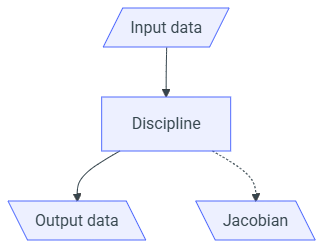
- A discipline computes output data from input data by using any type of model. Whether it is a Python function, an analytical expression, a legacy engineering code, an external executable, a spreadsheet, a web service, or a third-party tool, anything can be wrapped and exposed in a consistent way. The discipline offers a maximum integration freedom; it makes easy to connect heterogeneous components within a unified workflow without modifying the original tools.
-
Key features:
- Data validation
- Data persistence
- Jacobian support
- Pre-defined disciplines
- Automatic differentiation with JAX
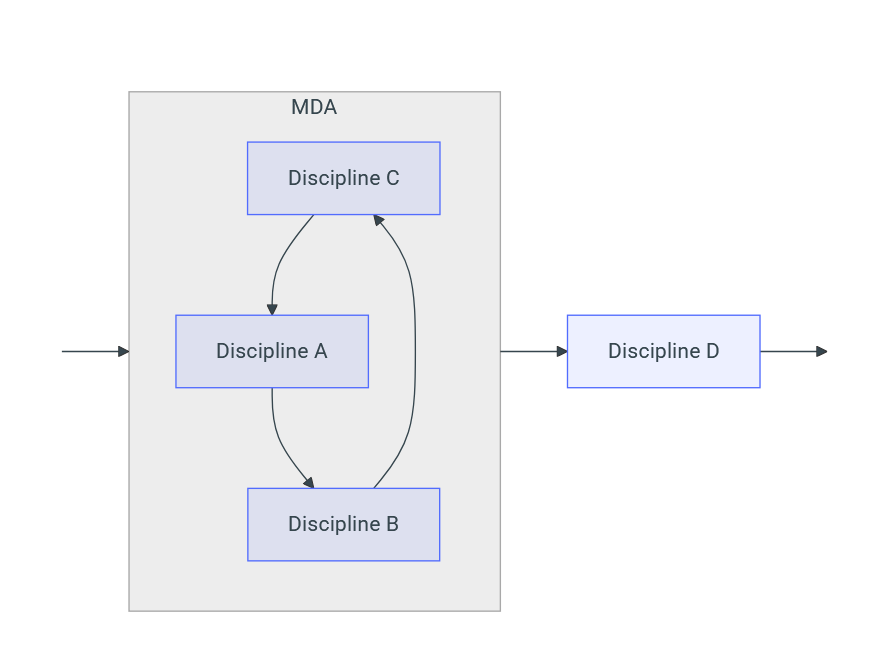
- Analysis delivers automatic detection of couplings between disciplines and visualizes them in an interactive graph, allowing engineers to pinpoint critical interactions. Its state-of-the-art MDA algorithms, combined with advanced acceleration and relaxation methods, significantly reduce computation time while ensuring robust convergence in complex, tightly coupled multidisciplinary workflows.
-
Key features:
- Automatic construction of the coupling graph
- Interactive coupling graph visualization
- State-of-the-art MDA algorithms
- Advanced acceleration & relaxation schemes
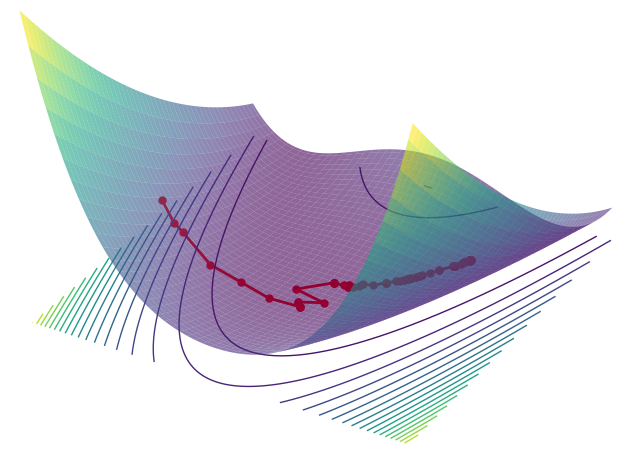
- Several interfaces to open-source optimization libraries are available, providing access to several families of algorithms: global or local, with or without gradient, genetic or deterministic, or based on the construction of a surrogate model. Certain proprietary algorithms are also available. Others, such as augmented Lagrangian, have been developed in-house, as have multi-objective strategies such as the mNBI method.
-
Key features:
- Gradient-based and -free optimization
- Multi-objective optimization
- Mixed-discrete optimization
- Advanced visualizations
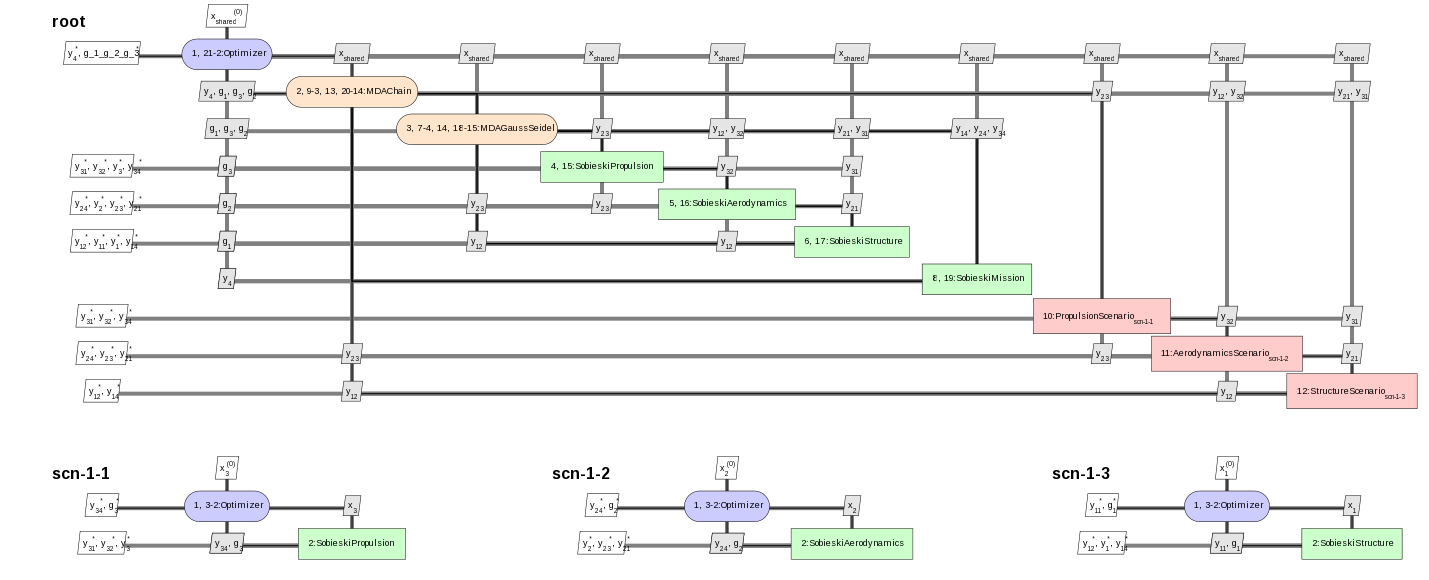
- MDO applies optimization methods to multidisciplinary problems, choosing strategies to solve strong couplings (e.g. using MDA or consistency constraints) or decompose the optimization problem into subproblems. These strategies are called MDO formulations, a.k.a. MDO architectures.
-
Key features:
- Multidisciplinary Feasible (MDF)
- Individual Discipline Feasible (IDF)
- Bi-level formulations
- MDO process visualization using XDSM
- Advanced use with process disciplines
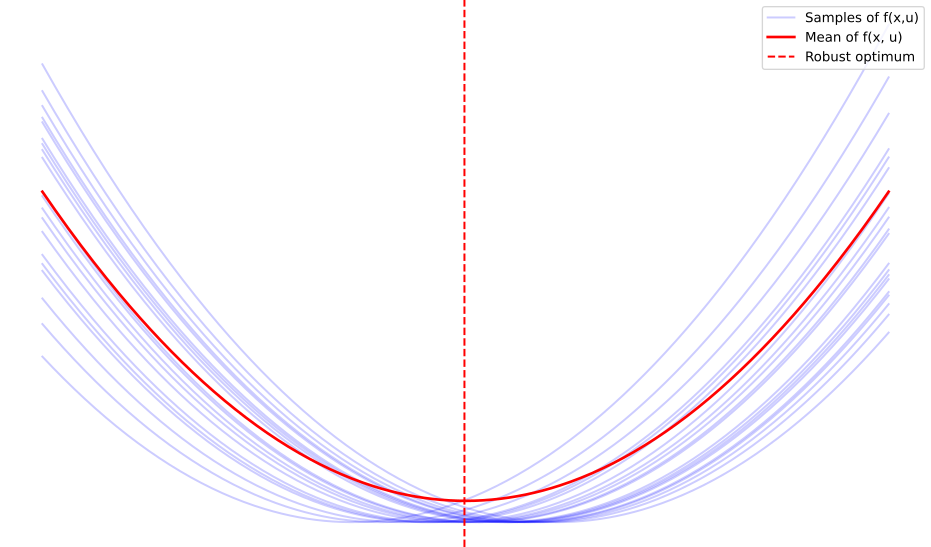
- Quantifying and managing uncertainties (UQ&M) in a simulator is now standard practice. But when multiple disciplines are involved, things can become complicated and new issues arise. GEMSEO applies and adapts UQ&M techniques to multidisciplinary studies.
-
Key features:
- Uncertainty quantification (UQ)
- Sensitivity analysis (SA)
- MDO under uncertainty
- Visualization of UQ and SA results
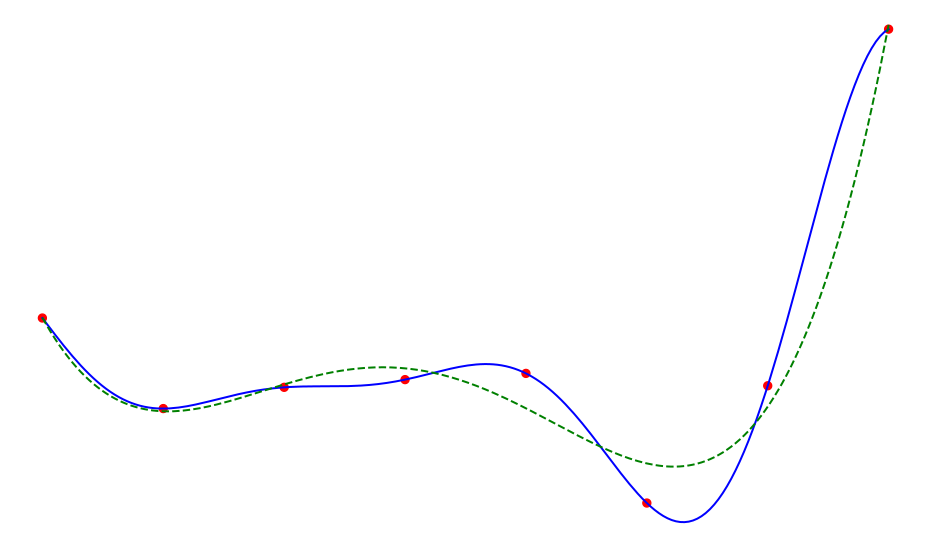
- Applications such as exploration, optimization, and uncertainty quantification can be simulation-intensive, especially when highly coupled disciplines are involved. The presence of costly disciplines is a barrier to their use. Replacing a discipline or group of disciplines with a data-driven surrogate model is a common practice to overcome this obstacle.
-
Key features:
- Surrogate model construction
- Quality assessment
- Machine learning capabilities
- Active learning, including surrogate-based optimization

- Data persistence is an important issue, whether for analyzing results (tables, visualizations, etc.), gaining an in-depth understanding of a result (the disciplinary conditions encountered during an iteration of the optimization loop), or continuing a study after a simulation crash.
-
Key features:
- Discipline evaluations backup
- Evaluation history backup
- Parallel data backup support
- Common data structure for post-processing
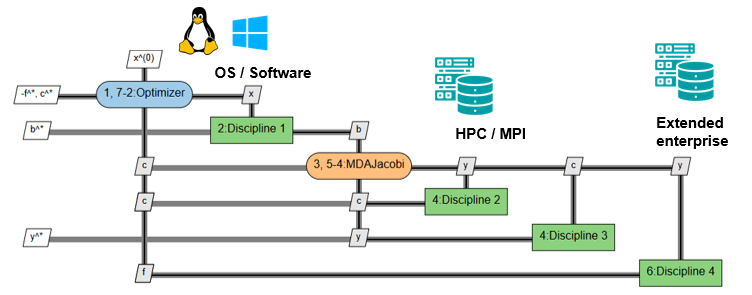
- GEMSEO provides a line of transfer disciplines that selectively offload parts
of the MDO process to remote machines: HPC job scheduling, SSH-based remote execution,
and HTTP-based discipline exposure as web services.
These services are composable, can be applied to any part of the process,
and are complemented by a retry mechanism for resilience against transient failures.
Read more -
Key features:
- HPC job scheduling (SLURM, LSF, PBS)
- Remote execution via SSH
- Discipline exposure as REST web services
- Error handling with configurable retry logic